

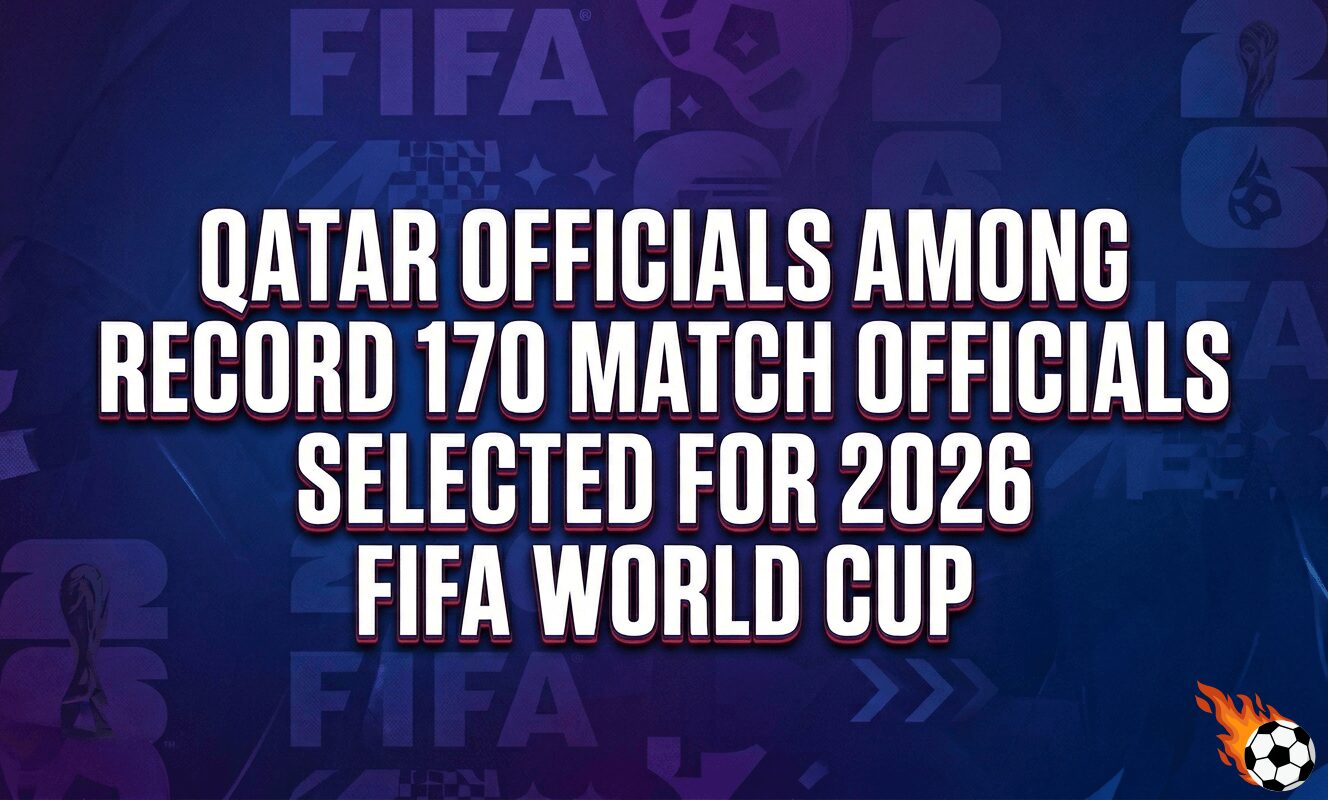
Qatar officials 2026 FIFA World Cup referees has secured four officiating spots in the historic list of 170 match officials selected for the 2026 FIFA World Cup, marking a milestone in global referee representation and reinforcing the country’s growing influence in international football governance.
FIFA Announces Historic Refereeing Line-Up for 2026 Tournament
In a significant development ahead of the expanded 2026 tournament, FIFA has unveiled a record-breaking pool of 170 match officials. This includes referees, assistant referees, and video match officials (VMOs), reflecting the scale and complexity of the upcoming 2026 FIFA World Cup.
The tournament, set to be jointly hosted by the United States, Canada, and Mexico, will feature an expanded format with 48 teams. This increase has necessitated a larger and more diverse officiating panel than any previous edition.
Qatar’s Representation Signals Continued Football Influence
Among the selected officials, four representatives from Qatar have earned their place, underlining the nation’s growing stature in global football. This follows Qatar’s successful hosting of the 2022 FIFA World Cup, which was widely praised for its organization and technological advancements in officiating.
The inclusion of Qatari officials is not just symbolic it reflects FIFA’s confidence in the country’s refereeing standards, training systems, and adherence to international protocols.
Diversity and Global Representation at the Core
FIFA’s latest announcement emphasizes inclusivity and global representation. Officials have been selected from all six continental confederations, ensuring a balanced mix of experience and regional diversity.
Key highlights of the officiating pool include:
- Representation from over 45 countries
- Inclusion of both experienced World Cup referees and emerging talents
- Continued integration of video assistant referee (VAR) specialists
- Strong emphasis on fitness, consistency, and decision-making accuracy
This approach aligns with FIFA’s broader strategy to enhance fairness and transparency in football’s biggest tournament.
Expanded Tournament Demands Larger Officiating Team
The 2026 edition will be the first to feature 48 teams, up from the traditional 32. This expansion significantly increases the number of matches, requiring more referees and support officials to maintain high standards throughout the competition.
With more games spread across multiple host nations and venues, logistical challenges also grow. FIFA’s decision to appoint a larger officiating team ensures that each match is handled by well-prepared and adequately rested officials.
Technology and VAR Continue to Play a Key Role
The use of technology, particularly VAR, will remain central to officiating in 2026. FIFA has continued to refine its video review systems since their introduction in the 2018 FIFA World Cup.
For 2026, enhancements are expected in:
- Real-time decision support
- Semi-automated offside detection
- Improved communication between on-field referees and VAR teams
Qatar’s prior experience with advanced officiating technology during the 2022 tournament positions its officials as valuable contributors in this evolving landscape.
Selection Process Based on Performance and Consistency
FIFA’s referee selection process is rigorous and data-driven. Officials are evaluated over several years based on:
- Match performance in international competitions
- Physical fitness and endurance
- Decision accuracy and consistency
- Ability to handle high-pressure situations
Workshops, seminars, and simulation exercises are conducted regularly to prepare officials for the demands of World Cup matches.
The inclusion of four Qatari officials indicates that they have consistently met these high benchmarks on the global stage.
Strategic Importance for Qatar’s Football Ecosystem
Qatar’s continued presence in FIFA’s officiating ecosystem highlights the country’s long-term investment in football development. Beyond hosting the 2022 World Cup, Qatar has focused on:
- Referee education and certification programs
- Integration of sports technology in officiating
- Collaboration with international football bodies
These efforts have helped position Qatar as a key contributor not just in hosting but also in shaping the technical aspects of the sport.
Global Expectations Ahead of 2026
As anticipation builds for the 2026 FIFA World Cup, the spotlight is not only on players and teams but also on the officials who ensure the integrity of the game.
With a record number of match officials and a strong emphasis on quality and diversity, FIFA aims to deliver a tournament that meets the highest standards of fairness and professionalism.
For Qatar, the selection of its officials serves as both recognition and responsibility. Their performance on football’s biggest stage will further influence perceptions of refereeing excellence in the region.
The announcement of 170 match officials for the 2026 FIFA World Cup marks a new chapter in the evolution of football officiating. Qatar’s inclusion with four officials underscores its growing influence and commitment to the sport beyond hosting duties.
As the tournament approaches, the role of referees—supported by advanced technology and global collaboration—will be crucial in delivering a fair and memorable World Cup experience.