


The FIFA World Cup 2026 schedule marks a historic expansion of global football, featuring 48 teams competing across the United States, Canada, and Mexico in the biggest tournament ever staged. The competition will include 104 matches across 16 host cities, beginning in Mexico City and concluding with the final in New Jersey.
A Historic Expansion for Global Football
The upcoming edition of the world’s most prestigious football tournament, organized by the FIFA, will be unlike anything seen before. For the first time, the World Cup will feature 48 national teams, expanding from the previous 32-team format and significantly increasing the number of matches and global participation.
The FIFA World Cup 2026 schedule reflects this transformation, stretching across three host nations: the United States, Canada, and Mexico. This makes it the first-ever tri-nation World Cup, reinforcing North America’s growing influence in global football infrastructure and fan engagement.
With 104 total matches, the tournament will run for nearly six weeks, offering fans more fixtures, more venues, and a broader international showcase than any previous edition.
Host Nations: USA, Canada, and Mexico Share the Global Stage
The 2026 tournament will be jointly hosted by:
- United States
- Canada
- Mexico
Each country will contribute major cities and world-class stadiums, ensuring regional balance and logistical efficiency. The United States will host the majority of matches, while Canada and Mexico will also stage key fixtures, including group-stage games and knockout rounds.
This shared hosting model is designed to maximize global accessibility, reduce travel strain for teams, and expand football’s commercial reach across North America.
Opening Match in Mexico City: A Symbolic Start
One of the most anticipated moments in the FIFA World Cup 2026 schedule is the opening match, which will take place in Mexico City at the legendary Estadio Azteca.
This stadium holds deep historical significance, having hosted World Cup finals in 1970 and 1986. Its selection as the opening venue reinforces FIFA’s intent to honor football tradition while launching a new era of the competition.
The opening ceremony is expected to draw massive global attention, setting the tone for a month-long football spectacle that will span continents and cultures.
Final in New Jersey: The Grand Conclusion
The tournament will conclude in the United States at the MetLife Stadium, which will host the World Cup final.
This venue, located in the New York metropolitan area, is one of the largest stadiums in North America and is already a major hub for international sporting events. Hosting the final in this region reflects FIFA’s strategy to place the most-watched match of the tournament in a globally connected city with strong infrastructure and media reach.
The final is expected to attract hundreds of millions of viewers worldwide, making it one of the most-watched sporting events in history.
Tournament Format and Match Distribution
The expanded structure of the World Cup introduces a revised format designed to accommodate 48 teams while maintaining competitive balance.
Key structural highlights include:
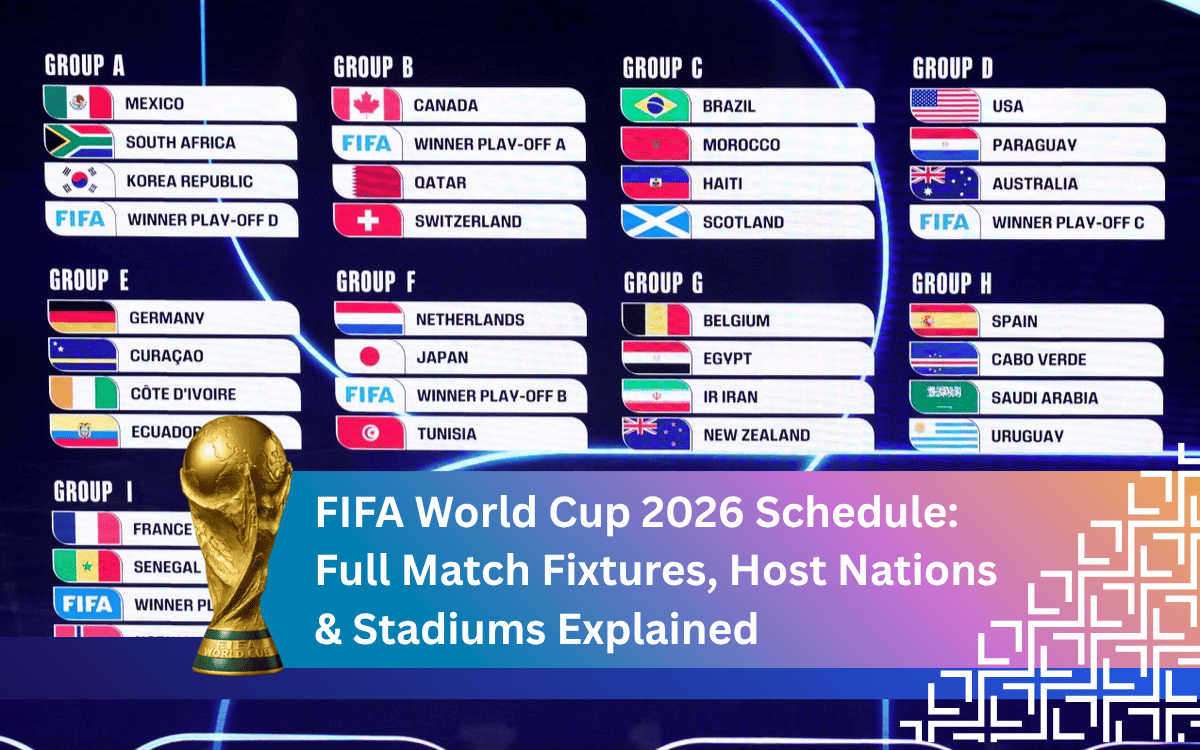
- 12 groups of 4 teams each
- Top two teams from each group plus best third-placed teams advancing
- A new knockout round of 32 before the Round of 16
- Total of 104 matches across the tournament
This structure ensures more nations experience World Cup football while maintaining high-stakes knockout drama in the latter stages.
Host Cities and Stadium Network
Across the three countries, 16 host cities will stage matches in world-class venues. While the full list spans North America, several key cities are expected to play central roles:
In the United States, major cities include Los Angeles, New York/New Jersey, Miami, Dallas, and Atlanta. Canada contributes Toronto and Vancouver, while Mexico hosts matches in Mexico City, Guadalajara, and Monterrey.
These cities were selected based on stadium capacity, transportation infrastructure, and fan engagement potential. The venues represent a mix of iconic football arenas and modern multi-purpose stadiums designed for global broadcasting standards.
What Makes the 2026 Schedule Different?
The FIFA World Cup 2026 schedule stands out due to several transformative changes:
First, the expansion to 48 teams introduces more diverse participation, giving emerging football nations a stronger presence on the world stage. Second, the tri-nation hosting model distributes matches across a vast geographical area, creating a continental tournament footprint rather than a single-country event.
Additionally, the increased number of matches provides more opportunities for fans, broadcasters, and sponsors, making it the most commercially significant World Cup to date.
From an SEO and global media perspective, this structure ensures continuous news coverage throughout the tournament, keeping engagement high from the opening match to the final whistle.
Global Expectations and Fan Impact
The anticipation surrounding the tournament continues to grow as qualifying campaigns progress worldwide. Fans are already analyzing potential group-stage matchups, travel logistics, and ticket availability across North America.
The expanded format is expected to significantly increase international tourism, with millions of fans traveling between host cities. This will create a festival-like atmosphere across stadiums and surrounding urban centers.
From a sporting perspective, analysts expect greater unpredictability due to the inclusion of more teams, which could lead to breakthrough performances and surprise results in the group stages.