

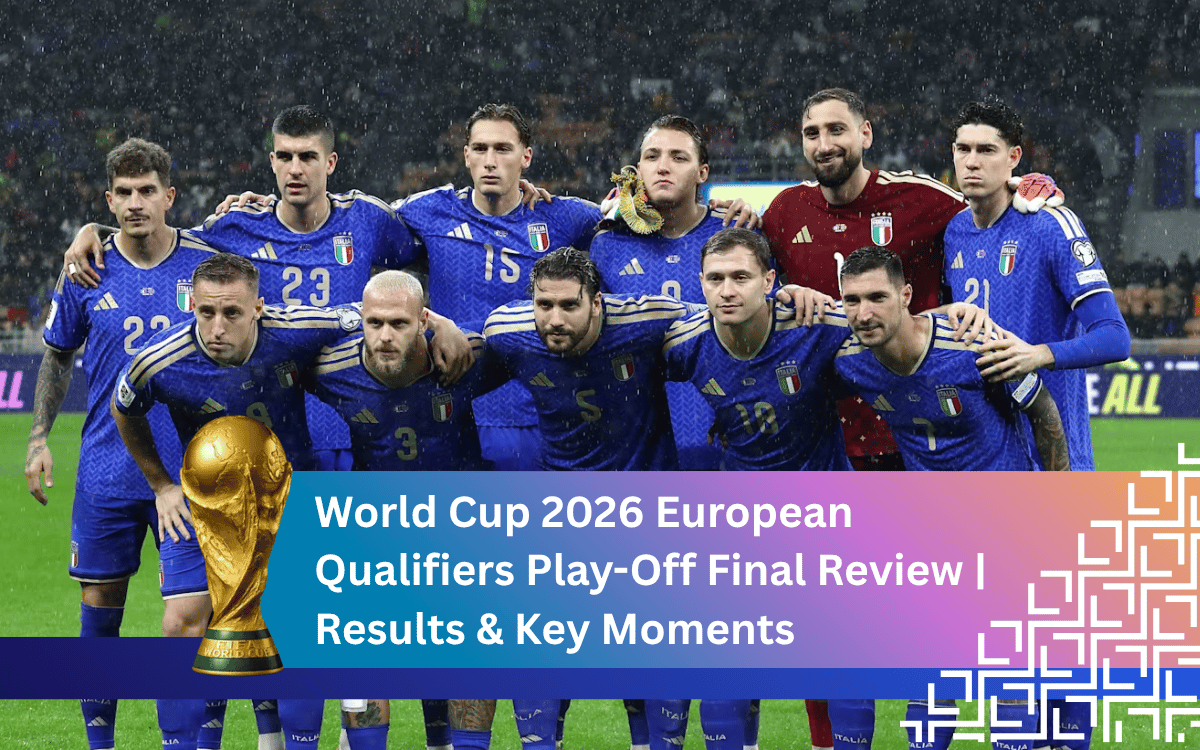
The World Cup 2026 European qualifiers play-off final review highlights a decisive stage in UEFA’s qualification process where national teams battled for the final available slots at football’s biggest tournament. These high-pressure encounters delivered intense competition, tactical battles, and emotional finishes as Europe’s last representatives for the expanded 2026 FIFA World Cup were confirmed.
This final phase of the European play-offs represented the ultimate opportunity for teams that narrowly missed automatic qualification. With limited spots available and everything on the line, the matches showcased both resilience and high-stakes football under immense pressure.
European Play-Off Final Stage
The European play-off finals serve as the concluding checkpoint in UEFA’s World Cup qualification pathway. Teams that finished just outside automatic qualification entered a knockout format designed to determine the final participants for the global tournament.
Unlike group-stage qualifiers, the play-off finals are typically single-elimination matches, meaning there is no room for error. One strong performance—or one mistake—can define a nation’s entire World Cup journey.
In the context of the 2026 qualification cycle, this stage carried even greater importance due to the expanded tournament format, which increased the number of European representatives while maintaining fierce competition for remaining slots.
High-Stakes Football and Tactical Intensity
One of the defining characteristics of the play-off final stage was the tactical discipline displayed by all participating nations. Coaches approached these matches with carefully balanced strategies, often prioritizing defensive organization while looking for decisive moments in attack.
Across the fixtures, several patterns emerged:
- Teams relied heavily on structured defensive blocks to minimize risk
- Counter-attacking play became a key weapon in breaking deadlocks
- Set pieces played a crucial role in tight matches
- Substitutions in the second half often shifted momentum dramatically
The intensity of these games reflected the magnitude of what was at stake: qualification for the FIFA World Cup, a stage that defines international football careers.
Pressure, Drama, and Defining Moments
The play-off finals are known for producing emotionally charged football, and this cycle was no exception. Matches were often decided by fine margins, with players stepping up in crucial moments to secure qualification for their nations.
While each fixture followed its own storyline, the broader narrative across the European play-offs was shaped by:
- Late goals changing qualification outcomes
- Extra-time battles pushing teams to physical and mental limits
- Goalkeepers making decisive saves under pressure
- Young talents emerging as unexpected heroes
These moments reinforced why the World Cup qualification process remains one of the most competitive environments in international sport.
Key Takeaways from the Qualification Deciders
The European play-off final stage not only determined which teams advanced but also offered deeper insights into the current state of international football in Europe.
1. Competitive Balance Across Nations
The gap between traditional football powerhouses and emerging nations continues to narrow. Several matches were closely contested, showing that qualification can no longer be taken for granted.
2. Importance of Squad Depth
In knockout-style fixtures, injuries, fatigue, and tactical adjustments played a crucial role. Teams with deeper squads often had an advantage in managing high-pressure scenarios.
3. Experience vs. Momentum
Experienced national teams leaned on tournament know-how, while younger squads brought energy and unpredictability. The balance between these factors often determined outcomes.
4. Margins Define Success
Across the play-offs, the difference between qualification and elimination often came down to a single goal, defensive error, or moment of brilliance.
Tactical Evolution in European Football
A notable aspect of the World Cup 2026 European qualifiers play-off final review is the continued tactical evolution seen across participating nations. Modern international football increasingly emphasizes flexibility, with teams shifting formations mid-match depending on game flow.
Many coaches adopted hybrid systems that allowed quick transitions between defense and attack. This adaptability proved essential in knockout matches where opponents are often evenly matched.
Additionally, pressing systems were carefully managed to avoid exhaustion, especially in fixtures that extended into extra time. This strategic balance highlighted the growing sophistication of international coaching approaches.
The Road Ahead to World Cup 2026
With the European play-off finals concluded, attention now shifts toward the preparation phase for the FIFA World Cup 2026. Qualified teams will begin refining tactics, managing player workloads, and organizing international friendlies to build cohesion.
For the teams that secured their place through the play-offs, momentum will be crucial. These nations often carry the confidence of overcoming high-pressure elimination matches, which can translate into strong tournament performances.
Meanwhile, the broader European football landscape will reflect on the competitiveness of the qualification cycle, as even strong teams were pushed to the brink in their pursuit of World Cup participation.